Under the hood
AI that's allowed to guess, but not allowed to show you a guess.
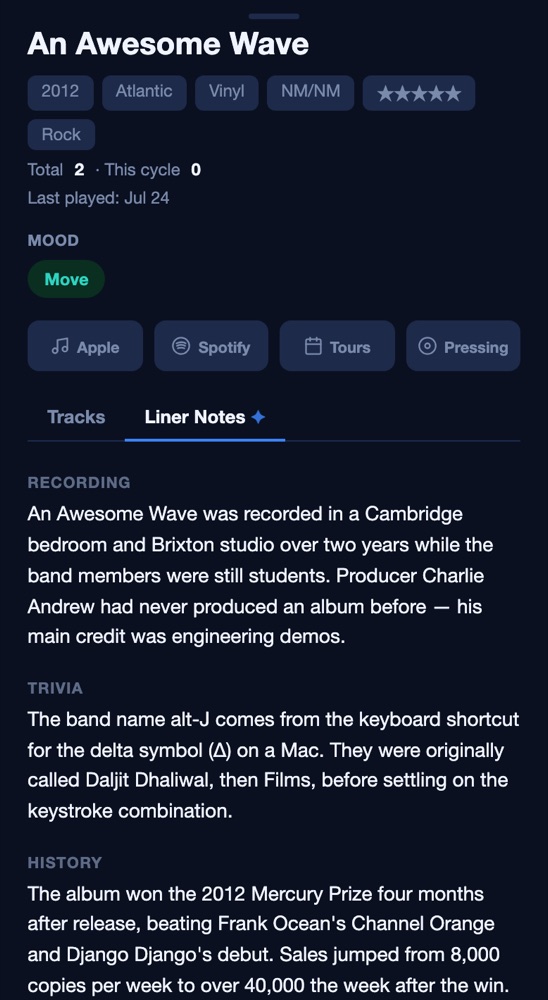
How: every liner note comes back with an honest confidence score. Anything under 0.7 is dropped on the server before you see it. On one album, the AI named a famous producer who never touched the record. It scored that note 0.68. The floor caught it.
Why: early versions told the AI to stay silent when unsure, and it went silent on The Dark Side of the Moon, All Eyez on Me, and Pulse. Letting it write freely and filtering on the server gets more notes and fewer mistakes.
A score isn't enough.
How: one note shipped at 0.95 confidence while talking about the AI itself instead of the album. Now a filter catches those. Sources are kept only if the search actually returned them, and piracy and store sites are blocked.
Why: confidence measures how sure the AI is, not whether the note belongs on the page. The server checks both.
An editorial bar, not just a style guide.
How: the AI is told that any fact on the back of the jacket or in every encyclopedia summary is below the bar. Lead with what a collector wouldn't already know.
Why: accurate but bland is a failure too. The notes have to be worth reading.
Mood is read from what you play.
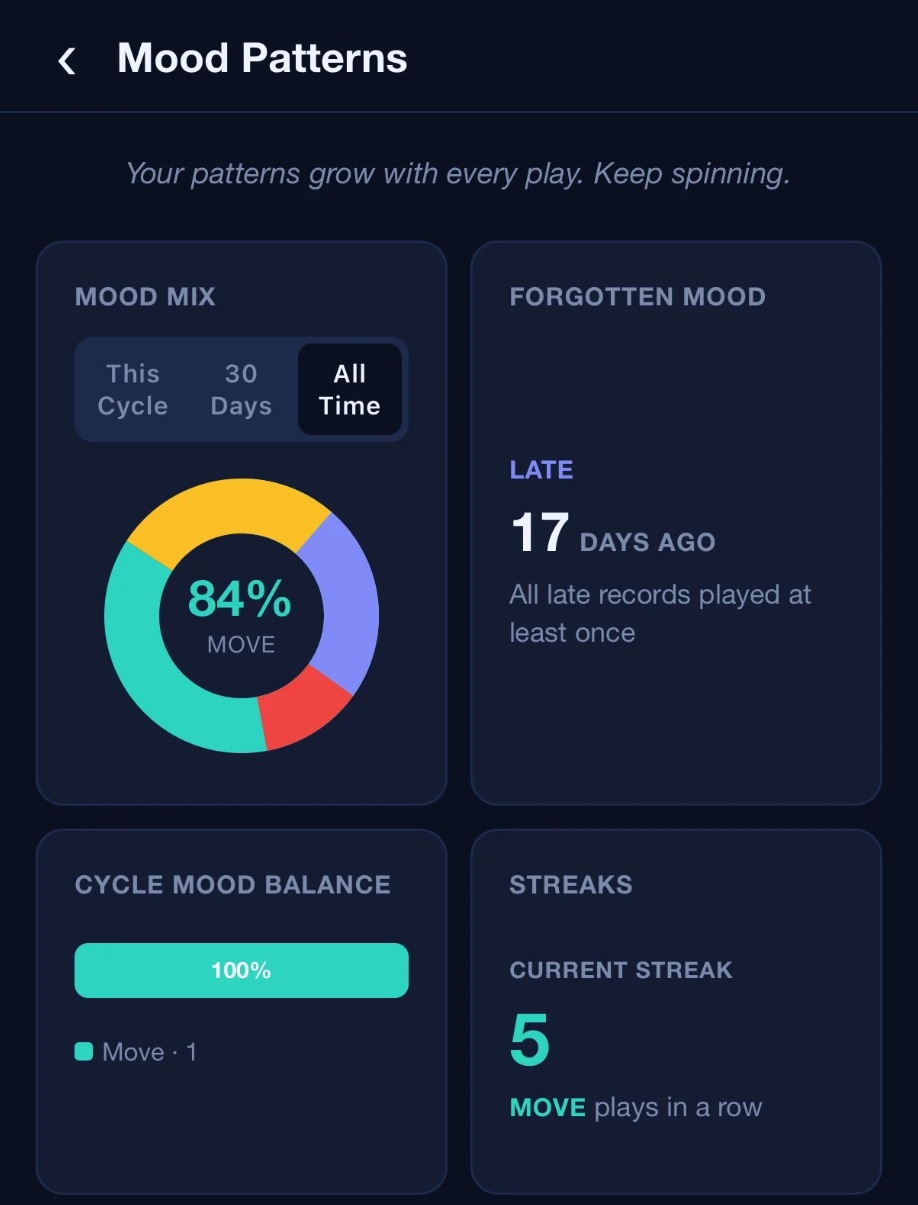
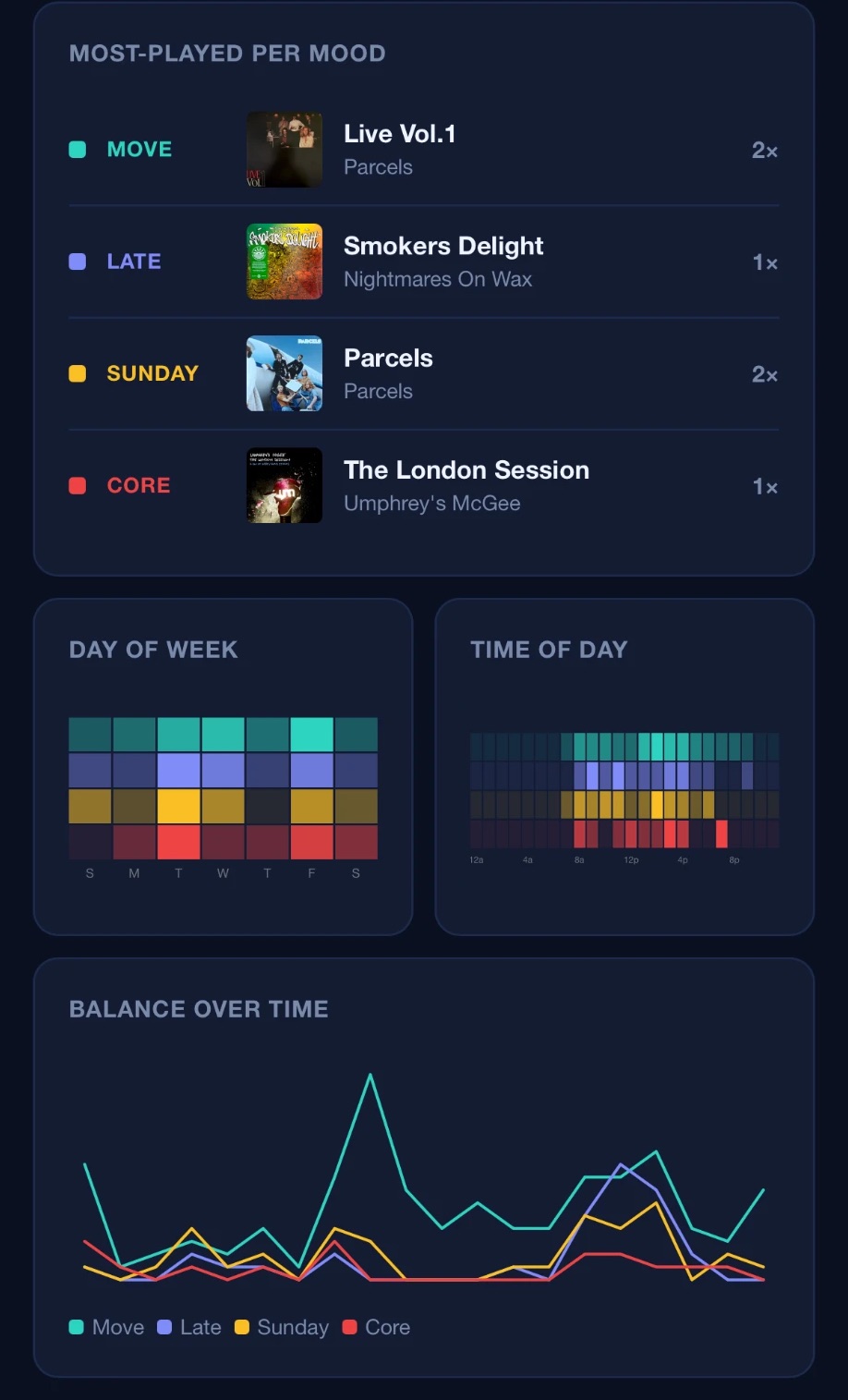
How: each record carries mood tags, from its genre, an AI suggestion, or you. Every play logs that record's moods. One play is noisy. Hundreds of plays show the pattern.
Why: no one wants to fill out a form while a record spins. The first version asked for a mood, and nobody did it.
AI suggests. You approve.
How: AI can only suggest moods from your own list. A review screen shows every proposed change before anything is saved. Tags you set by hand are never overwritten.
Why: it's your collection. You should know exactly what changed in it.
The recap never waits on AI.
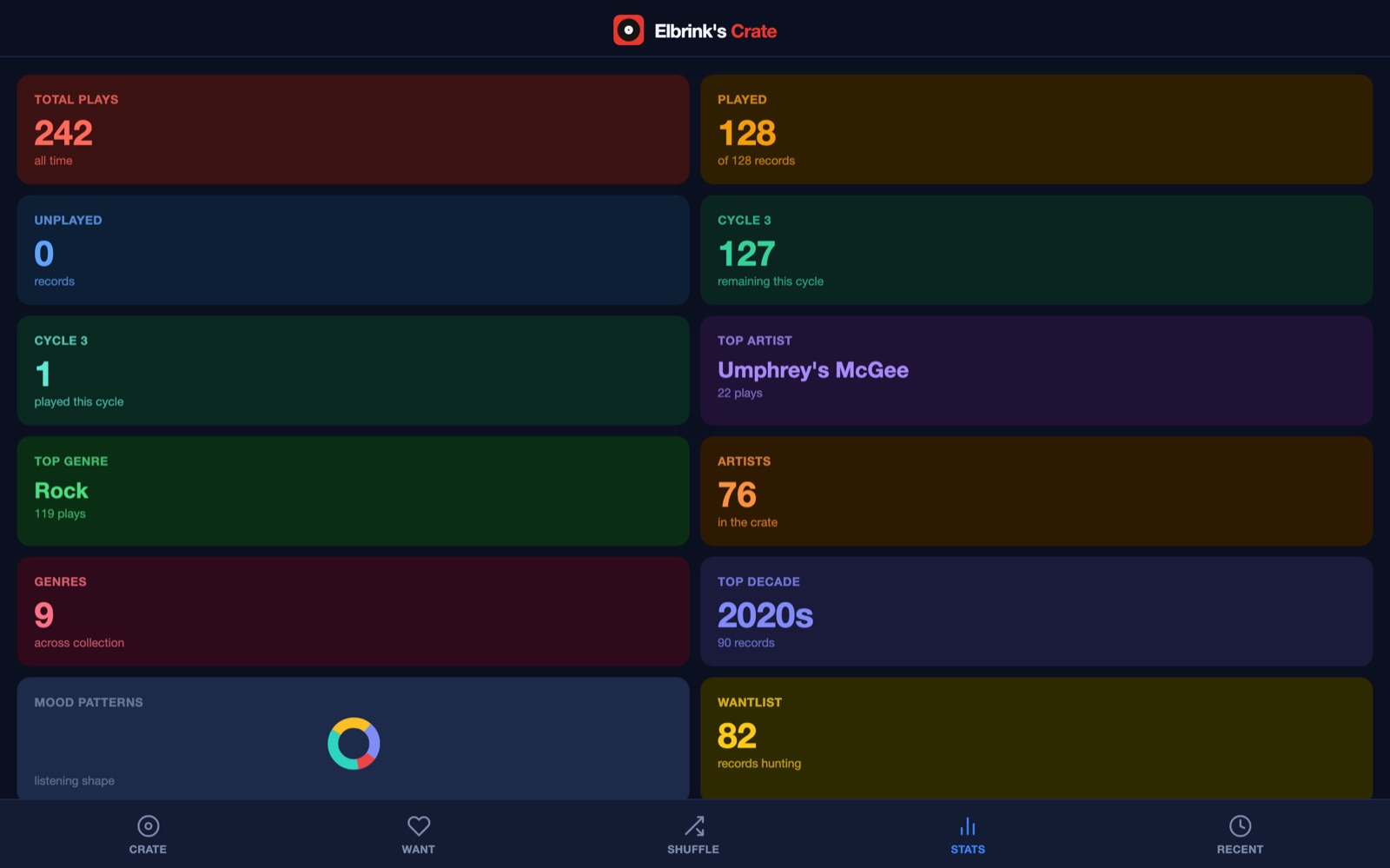
How: the numbers come from your stored plays. AI writes only the lines that connect them, once, and those are saved. If the AI is down, the recap still arrives.
Why: finishing a cycle takes months. The moment shouldn't depend on a service being up.
Every cycle is kept.
How: each play is logged as an event, and cycle status is worked out from those events. The database itself saves each finished cycle.
Why: the app used to do the saving, and one morning it lost a real cycle. Moving it into the database means it can't happen again.
One app, many collectors.
How: every collector's data is walled off at the database. Before friends joined, a sweep found the share image still had "Elbrink's Crate" written into it.
Why: a friend's share card would have carried my name. Multi-user means checking every place the app assumed it was mine.
Its own product, not a skin.
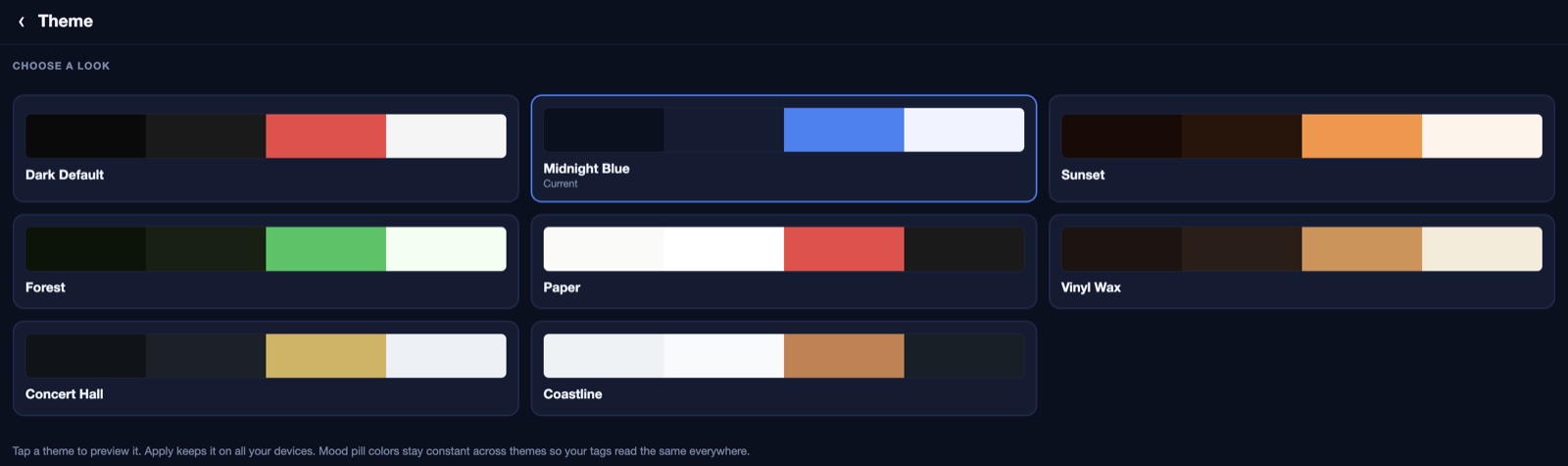
How: the service the collection syncs from is named only where you connect your account and in Settings. Automated checks guard the screens where it used to slip through.
Why: Crate has its own voice. A data vendor's name across the screen makes it read like a skin on someone else's product.
Light by design.
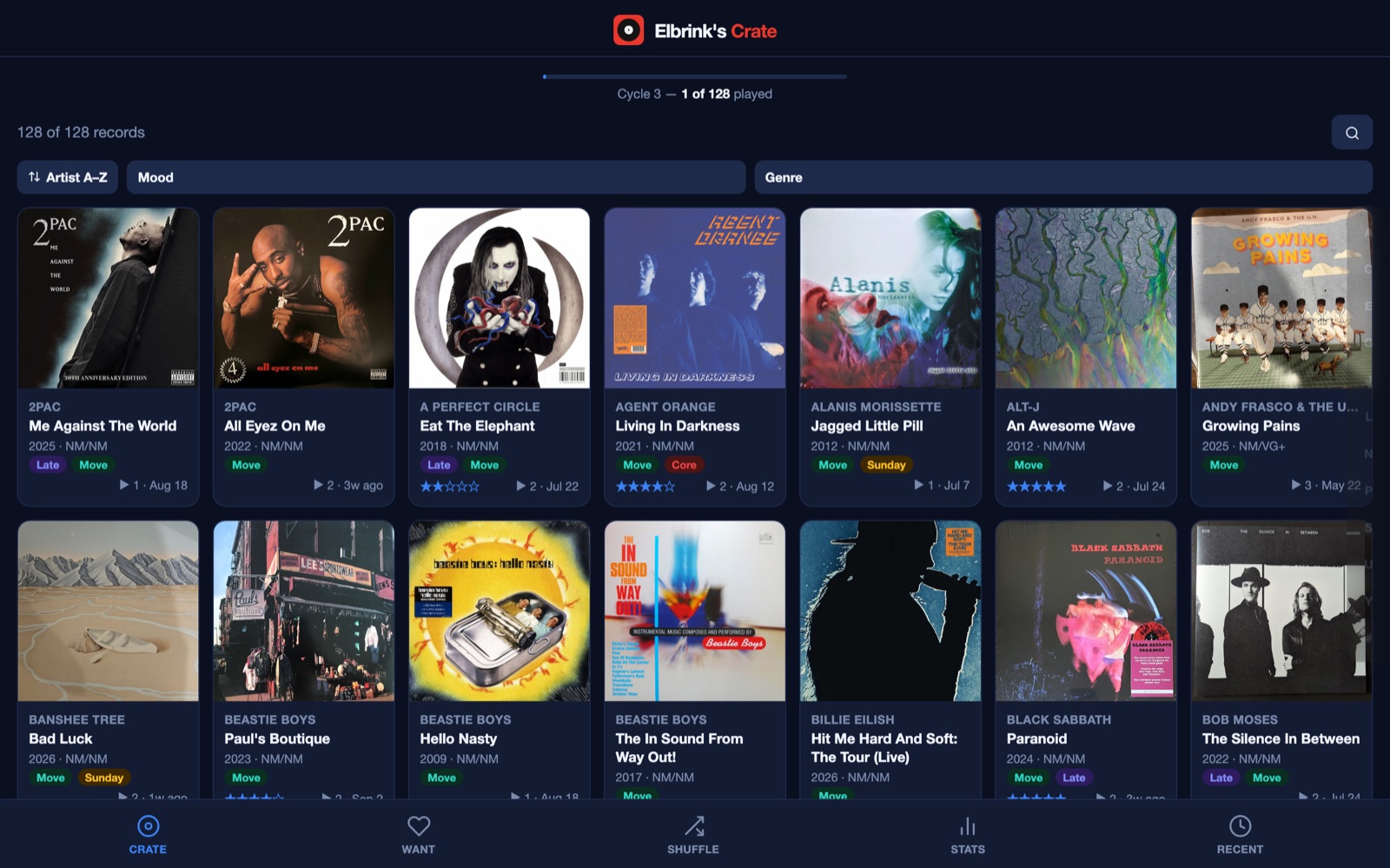
How: one file per page, no framework, no build step. It installs to a phone home screen like an app.
Why: fast to load, cheap to run, little to break.