A bluegrass podcast and more than fifteen years of live footage, on a site that runs itself.
Trevor Shaw has hosted a weekly bluegrass podcast for four seasons and filmed live shows since 2010. More than 3,000 videos. None of it had a home. The episodes lived in podcast apps. The footage lived in a YouTube channel so deep that Trevor himself couldn't find it. YouTube lists newest first. Getting back to a 2007 show took him close to an hour.
Now it takes a search box. Every episode and every video lives in one place, and the site keeps itself current. Trevor publishes the way he always has. The site does the rest.
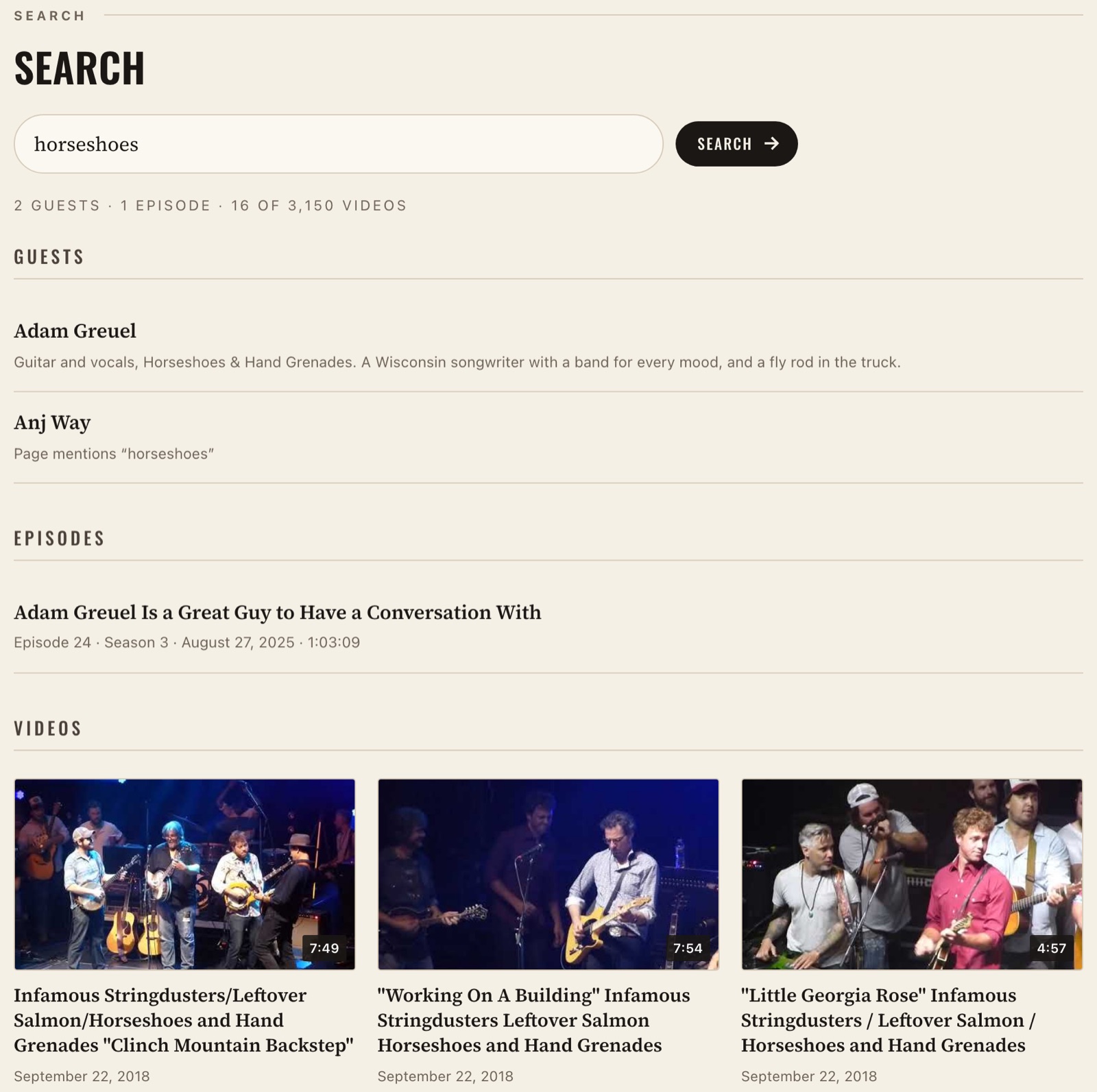
Type a band, a guest, or a venue and every video answers. Search forgives spacing, accents, and punctuation, so "Mooseknuckle" still finds "Moose Knuckle." Search a name and the guest's page comes first.
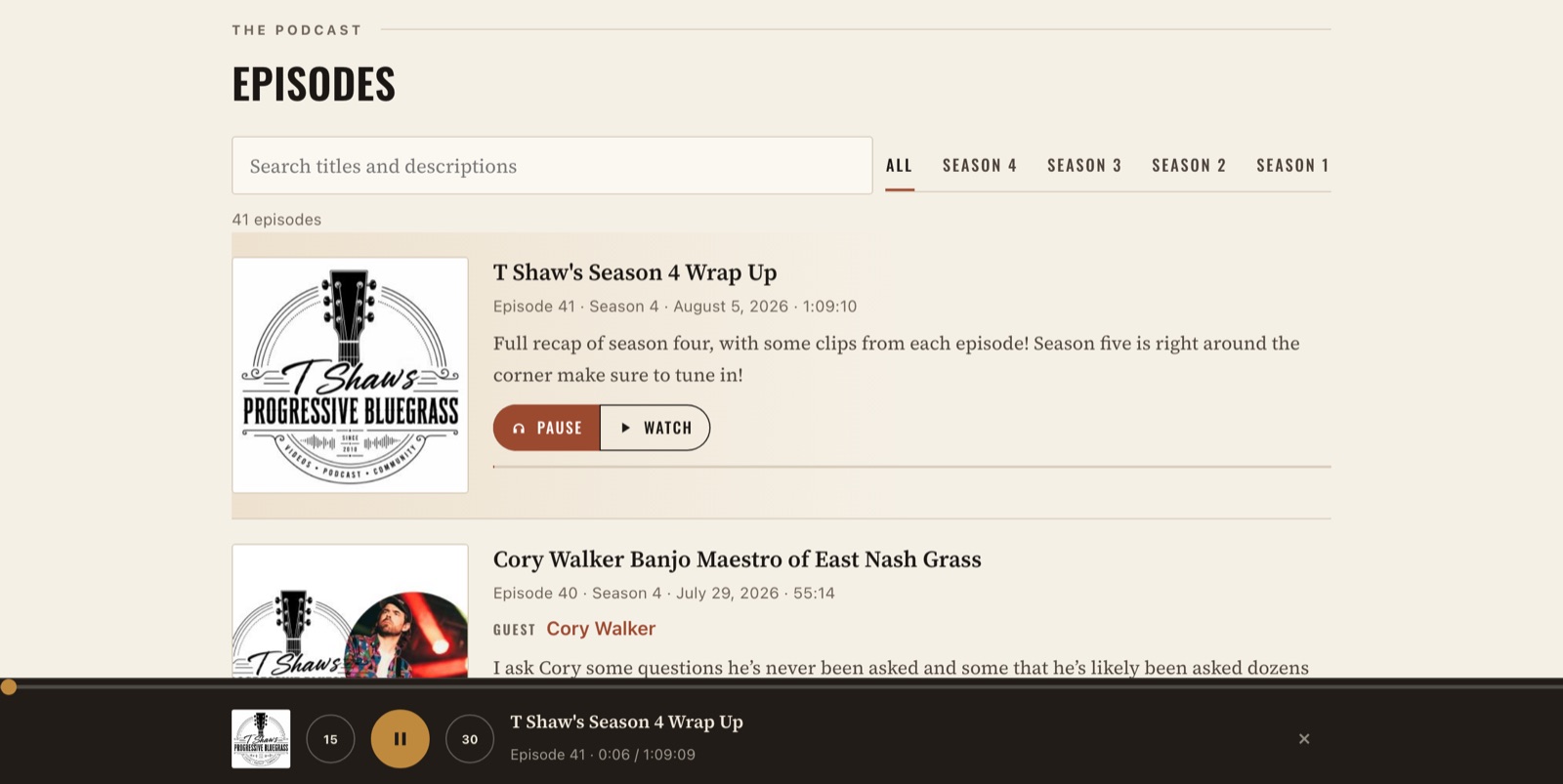
Every episode plays on the site, and the audio keeps playing as you move from page to page. Where an episode has a video, it opens in a player on the page. Nobody gets sent off to YouTube.
The footage is organized the way it was filmed: 85 concerts, each its own show. Or browse everything by year.
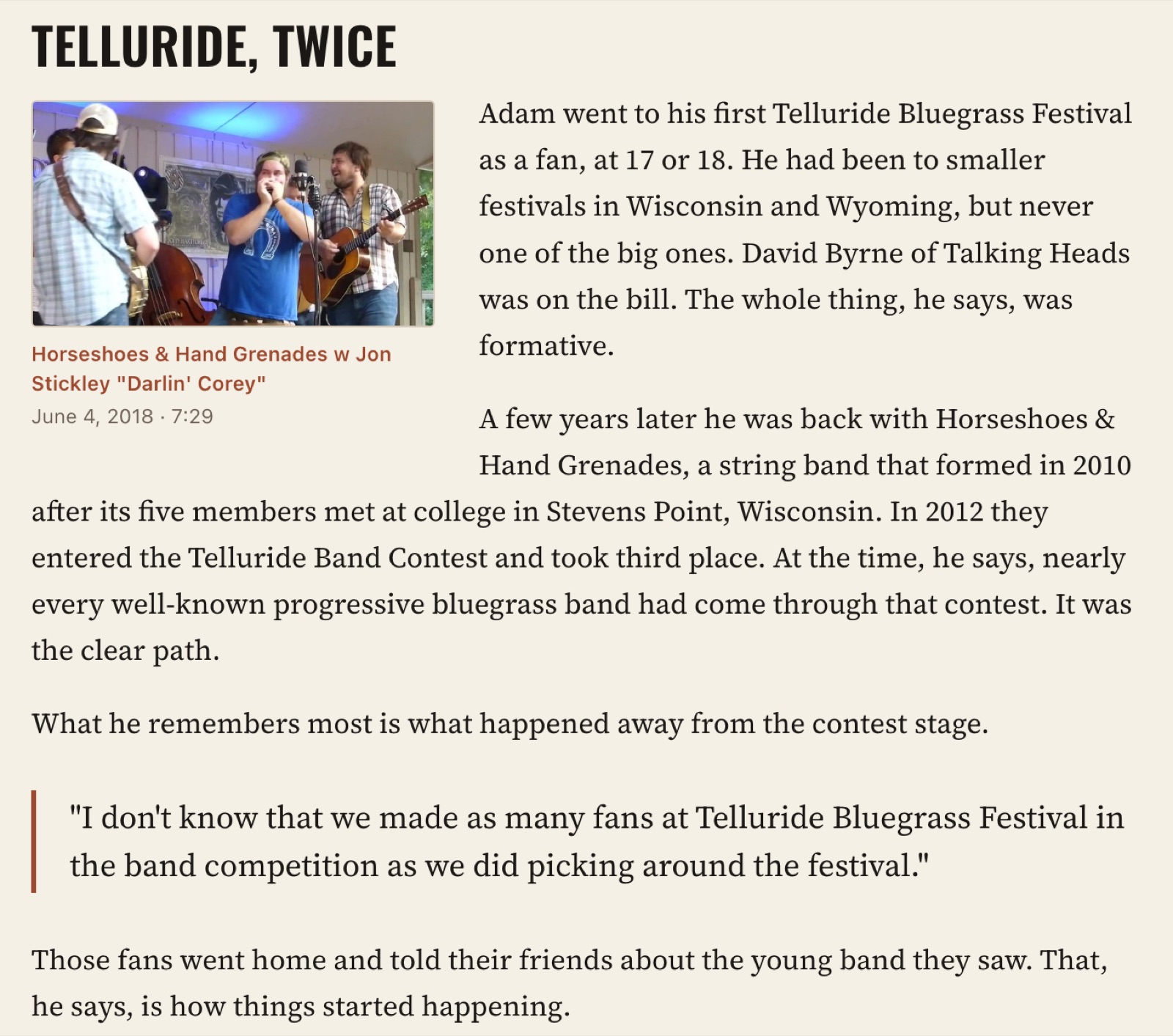
Each one starts with the full, timecoded transcript of their episodes, then goes past the show: career, bands, records, and honors, researched and checked against the artist's own site and the organizations that awarded them. An at-a-glance profile, four to six story sections, their best lines from the show, every episode they appear in, and where to find them next. Twenty guest pages so far. Guests started sending their own photos within days of seeing theirs.
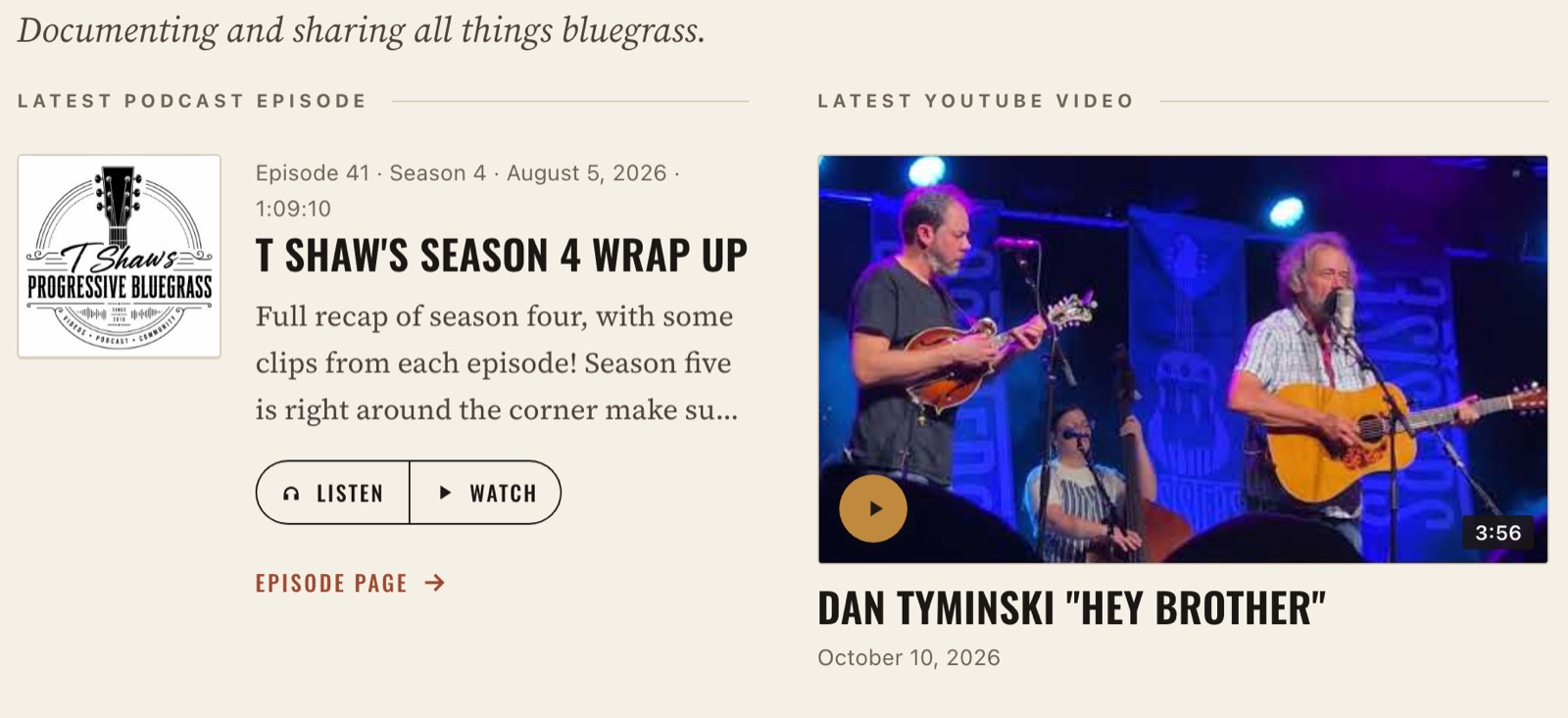
The homepage features one archive video a day, about eight and a half years before a repeat. A second slot always shows the newest upload for its first week.
He pins, schedules, features, or skips the daily video, and polishes its caption with one AI button. No developer needed.
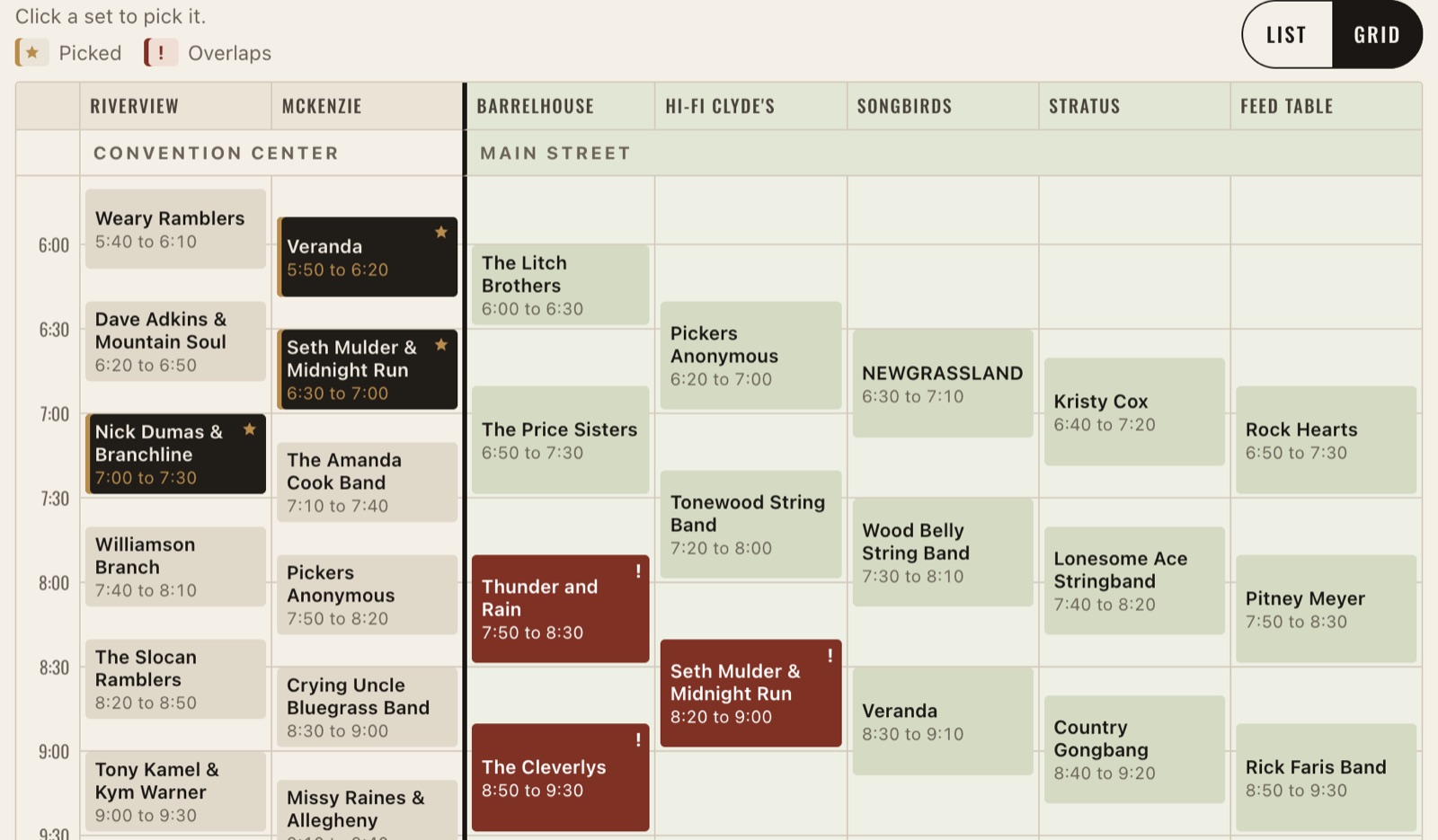
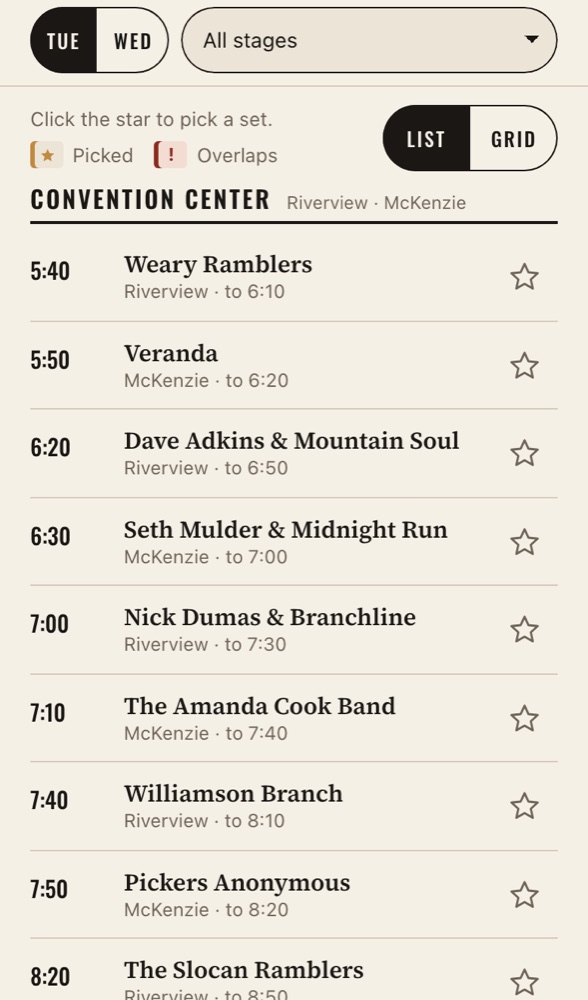
For a Chattanooga bluegrass weekend: 61 sets across seven stages. Pick your sets, add up to six plans of your own, and see clashes and walking times between venues. The plan flags your long breaks and the last shuttle. Share it by link or QR code, email it to yourself, or drop it into your calendar. Built in a day. Live six days ahead of deadline.
How: Trevor adds one line to his show notes, "Guest: Name (Band)," and the site reads it, even mid-paragraph. It handles multiple guests, bands, and accented names, and leaves the host off his own list.
Why: a new guest appears on the site the day the episode drops, with no one touching a page.
How: sentences on the About page read live counts at load. "Four seasons and forty-one episodes" becomes "five seasons and forty-two" on its own, with written fallbacks if the data is unreachable.
Why: no stale facts, and no one has to remember to update them.
How: indexing the full archive takes 13 to 20 seconds, too slow for a visitor to wait on. The site rebuilds the index in the background and serves a stored copy. Three layers of stored copies, each added after a slow load was measured, not guessed.
Why: the archive can keep growing without the site getting slower.
How: the homepage walks a fixed shuffle of the entire archive, one video a day. Trevor can pin, schedule, or skip from his control panel, and a skip sends that video half the archive down the list so it never steals tomorrow's.
Why: fresh every day, zero effort, and the owner still has the final say.
How: on fixed dates the planner and a banner on every page change themselves. Before the weekend, an invitation. After, past tense. Then the banner disappears. No one publishes anything.
Why: an event page that goes stale the Monday after looks abandoned. This one never does.
How: an automated check runs before every release. A guest link pointing at a page that doesn't exist, a guest who drops off the list, a stale search index, bad festival data, a Watch button with no confirmed video, or an image carrying hidden file data stops the release. The live site stays as it was.
Why: Trevor isn't technical and shouldn't have to be. No one checks by hand, and nothing broken ships.
How: images can carry hidden data, like the device, the location, or the account that made them. The site's own logo files turned out to carry a design account's identity. Now every image is checked on its way out, and anything carrying hidden data fails the release.
Why: one leak is too many on a site that features real people.
"You just type in Billy Strings, boom, every Billy Strings video I've ever recorded is there."
Trevor Shaw, host
"Your work is having me rediscover an amazing moment in time that never would've existed if it wasn't for your website."
Trevor Shaw, on a musician he'd lost touch with who turned up in the daily video
"I can send it to a much higher caliber musician now."
Trevor Shaw, on booking guests
"What a neat laid out page... I'm honored to be part of it!"
Adam Greuel, Horseshoes & Hand Grenades
"You are doing the lords work here!"
Katie Kirchner
"This is so great!... The page looks awesome!"
Anj Way
More than fifteen years of music was already there. It just needed a way back to the people in it.